

Reviewed by
General Dentist, Seven Hills General Dentistry in Bridgetown, Cincinnati
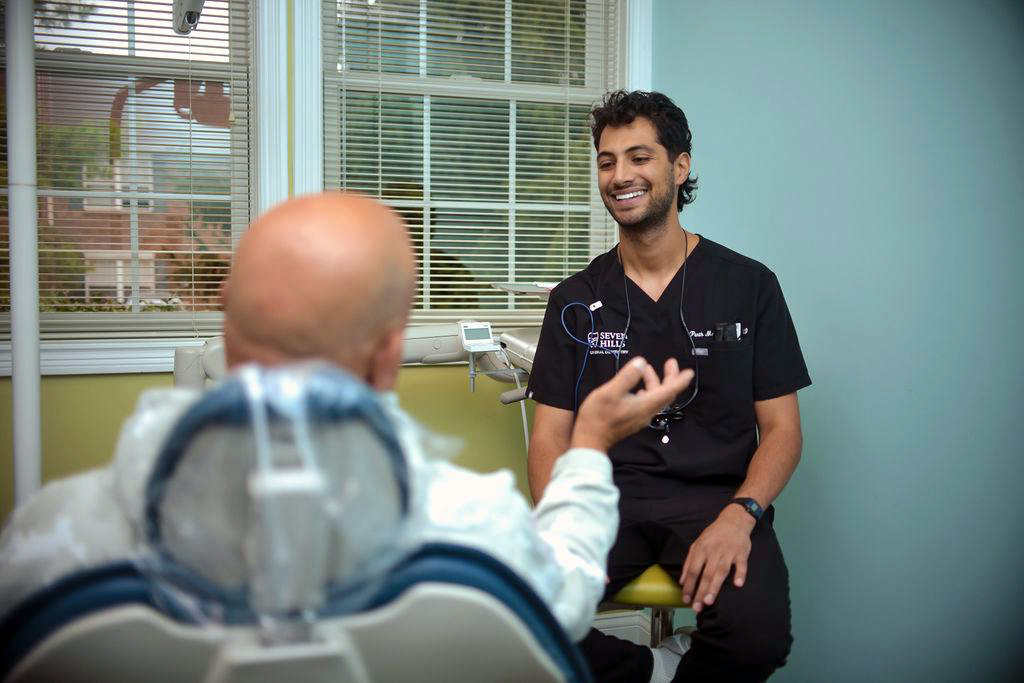
Most people who look into cosmetic dentistry are not after a new smile. They are after one thing that has bothered them for years.
A chipped front tooth. A tooth that went gray after an old root canal. A gap. Teeth that grew shorter and yellower over two decades without any single day you could point to.
Seven Hills General Dentistry is in Bridgetown, on the West Side of Cincinnati, and most people who come here looking for a cosmetic dentist in Cincinnati arrive with that one concern rather than a list of procedures. Dr. Parth Maheshwari starts there and works backward from it. His approach combines careful planning with photographs and digital scans, and he has recently purchased a 3D printer with the aim of adding smile mock-ups to that process.
The question he answers first is what the smallest change would be that solves what you came in about, rather than what a complete plan would involve.
Sometimes that is one appointment and some composite. Sometimes it is considerably more. You will know which before you agree to anything.
The short answer
Cosmetic dentistry covers the dental treatments used mainly to improve the color, shape, proportion, or overall appearance of teeth. The common options are professional teeth whitening, cosmetic bonding, veneers, and tooth-colored crowns, and a smile makeover combines several of them.
At Seven Hills General Dentistry in Bridgetown, on Cincinnati’s West Side, the starting point is usually the least invasive treatment that solves the problem. Whitening removes no tooth structure, bonding removes little or none, and veneers and crowns require permanently reshaping the tooth. Cosmetic dentistry is also not a recognized dental specialty, so what matters is how much of this work a dentist actually does rather than what the practice is called.
What people actually come in about
The complaint is usually specific, and people can name it immediately.
A chipped or worn front tooth. Often chipped years ago, patched once, and the patch has drifted to a slightly different color than the tooth around it.
Shade. Nothing happened. Coffee happened, over twenty years, and the change was slow enough that photographs are the only reason anyone noticed.
A crown on a front tooth that does not match. It looked acceptable in the chair and has never quite looked right since.
A gap, or teeth that overlap. Sometimes this is a cosmetic question and sometimes it is an orthodontic one, and the honest answer depends on the case.
A tooth that darkened from the inside. Usually after trauma or a root canal, and it behaves differently than surface staining.
Several of these at once, built up over enough years that a person has quietly stopped smiling with their teeth in photographs.
None of that is vanity. Your smile can affect how comfortable you feel when speaking or being photographed. Deciding to address them is a reasonable thing for an adult to do, and nobody here treats it as anything else.
Start with the smallest change that solves it
This is the order Dr. Parth works in, and it is the same for every patient.
First, whether anything is actually wrong. Decay, a cracked tooth, gum disease, or a bite that is wearing the front teeth down. Those sit on the general dentistry side of the practice, and cosmetic work placed over an unresolved one does not hold up well. A worn edge rebuilt without addressing why it wore will tend to wear again.
Second, the least invasive option that would solve the complaint. Whitening removes nothing from the tooth. Bonding removes little or nothing. Veneers and crowns require reshaping the tooth, and that part does not reverse.
Third, the larger plan, only if the smaller options cannot get you where you want to be.
A fair number of people come in expecting veneers and leave with a whitening plan and one bonded edge. Some cases genuinely need the larger treatment, and Dr. Parth will say so directly, with photographs and a scan on the screen in front of you.
Appointments here are scheduled with enough time to compare those options properly rather than deciding in a rushed conversation.
What would you like to change about your smile?
Three quick questions to help you prepare for a consultation. Your answers stay on this page. This does not diagnose a dental problem or decide which treatment you need.
What bothers you most?
What matters most to you?
Where are you in the process?
Your consultation starting point
An exam is needed to assess tooth health, restorations, gums, and your bite before recommending treatment.
What cosmetic dentistry covers, in plain English
These procedures solve different problems, and mixing them up is how people end up paying for treatment that was never going to fix what they came in about.
Professional teeth whitening
Whitening lightens natural tooth structure. It works on staining that has accumulated in and on the enamel from coffee, tea, red wine, tobacco, and time.
The difference between professional whitening and a drugstore kit is concentration and fit. Professional gels are stronger, and they are delivered in a way that holds the gel against the teeth and away from the gums, which is where much of the sensitivity from over-the-counter kits originates.
Two things are worth knowing before anyone spends money on it.
Whitening does not change the color of crowns, veneers, bonding, or fillings. If any of those sit in your smile line, they will stay exactly the shade they are now while the teeth around them lighten.
And some discoloration does not respond to surface whitening at all. A tooth that darkened from the inside after trauma is the common example, and it needs a different approach.
Dr. Parth looks at what is causing your shade before recommending whitening, which is the step that prevents people from paying for something that was never going to work on their particular problem. The American Dental Association maintains general guidance on tooth whitening for patients who want to read further.
Cosmetic bonding
Bonding is tooth-colored composite shaped directly onto the tooth, hardened with a light, and polished. It is done in a single visit, without a laboratory.
It is the correct answer for a surprising number of front-tooth problems: a chip, a small gap, an edge that has worn unevenly, or a tooth with a shape the patient has never liked.
The honest limitations are that composite picks up stain over time in a way porcelain does not, it is not as strong as porcelain, and it will eventually need repair or replacement. The honest advantage is that it is conservative, usually finished in one appointment, and many repairs can be made with little or no preparation of the natural tooth.
For one chipped front tooth, bonding is very often the entire answer. It is also the usual starting point for patients who want the problem fixed but do not want veneers, which is a preference worth stating out loud at the first visit.
Veneers
A veneer is a thin shell bonded to the front of a tooth. Veneers are what most people picture when they think about cosmetic dentistry, and they are the appropriate tool when several front teeth need to change shape, length, and color at the same time.
There are two general approaches. Porcelain veneers are made in a laboratory and bonded at a later visit, and porcelain holds its color and polish well over time. Composite veneers are built directly on the tooth, usually in fewer visits, and are easier to adjust or repair.
The part that deserves attention is that veneers usually require removing a layer of enamel so the veneer sits flush rather than bulky, and that step does not reverse. The section below on what is permanent covers what that commits you to.
None of which argues against veneers for the patients who need them. When several front teeth genuinely need to change, veneers are often the right treatment, and Dr. Parth will walk through exactly what is being removed and why before anything is touched. The ADA's patient information on veneers covers the same ground independently.
Crowns
A crown covers the whole tooth rather than the front surface. It is the answer when a tooth is broken down, heavily filled, cracked, or has had a root canal and needs the protection.
Crowns sit in two categories at once. They are structural work that also has to look right. Matching a single crown to the natural teeth beside it is one of the more demanding things in dentistry, because the difficulty is in shade and translucency rather than in fabrication.
Replacing a tooth that is missing
If the gap you are unhappy about is an actual missing tooth, that is a different conversation and usually a dental implant one. Dr. Parth places implants at this office, plans them on a 3D CBCT scan, and restores them here as well.
Smile makeovers and full smile plans
Some patients do want everything addressed, and that is a legitimate thing to want.
A smile makeover may combine whitening, bonding, veneers, crowns, dental implants, or orthodontic treatment, depending on what actually needs to change. The work is sequenced over months, often beginning with getting the bite and the gum health stable, and it is designed on photographs and digital scans so the shape and proportion can be reviewed before anything is fabricated.
Nothing is made until you have seen the plan and agreed with it.
When straightening is the real answer
Sometimes what bothers a patient about their smile is crowding or alignment, and the honest answer is orthodontics rather than anything cosmetic.
Covering crooked teeth with veneers instead of straightening them is a trade: a faster result in exchange for more enamel removed. Dr. Parth will say when he thinks moving the teeth is the better call.
When orthodontic treatment is the better fit, Dr. Parth frequently refers patients to Dr. Steve Haverkos at Haverkos Family Orthodontics on Cincinnati’s West Side.
Which procedure does what
| Treatment feature | Whitening | Bonding | Veneers | Crowns |
|---|---|---|---|---|
| What it changes | Shade only | Shape, small chips and gaps, surface | Shape, length, and color across several teeth | The whole tooth, for strength and appearance |
| Tooth structure removed | None | Little or none | A layer of enamel, permanently | The most of any option here |
| Reversible | Yes, in the sense that nothing is removed | Usually | No | No |
| Typical visits | One visit, or a course of tray wear at home | One | Two for porcelain, often fewer for composite | Two |
| Stains over time | Result fades and needs touch-ups | Yes, more than porcelain | Porcelain resists staining well | Depends on the material |
| Usually right for | Overall shade with no restorations in the smile line | One or two specific flaws on otherwise sound teeth | Several front teeth needing real change | A tooth that is damaged as well as unattractive |
Which of these applies is a question the exam and the photographs answer. It is worth saying that most people need fewer of them than they expect.
Making it look like your teeth rather than like dental work
Almost everyone who comes in about their smile is quietly worried about looking like they had work done, and they tend to raise it well before they raise cost.
Everyone has seen the version that went wrong: too white, too even, too long, every tooth the same shape. It makes people look at the teeth instead of at the person.
Avoiding that is a design decision made before anything is fabricated, not a matter of luck at the laboratory. It comes down to a few things.
Shade chosen against your face. Skin tone and eye color, in natural light, rather than the brightest tab on the shade guide.
Proportion that fits you. Length and width designed to your face and your age rather than to a template.
Deliberate variation. Natural teeth are not identical to each other, and building in small differences is what keeps a result from reading as a set.
Restraint about how many teeth are treated. Treating two teeth that need it usually looks better than treating eight that did not.
If the result is noticeable as dental work across a dinner table, it did not work. Tell Dr. Parth at the first visit if this is your concern, because it changes how the case gets designed.
A smile with new veneers

Minimal-prep veneers and more confidence at work
For this patient, working in sales meant talking with customers throughout the day. Feeling confident in her smile mattered in those everyday conversations.
Dr. Parth treated her with minimal-prep veneers. He describes the result as giving her much more confidence in her smile—a meaningful change for someone whose work kept her face to face with people all day.
The photographs below show her with Dr. Parth and a close-up of her veneers. This was her individual treatment plan; the amount of tooth preparation needed varies by patient and should be discussed before treatment.
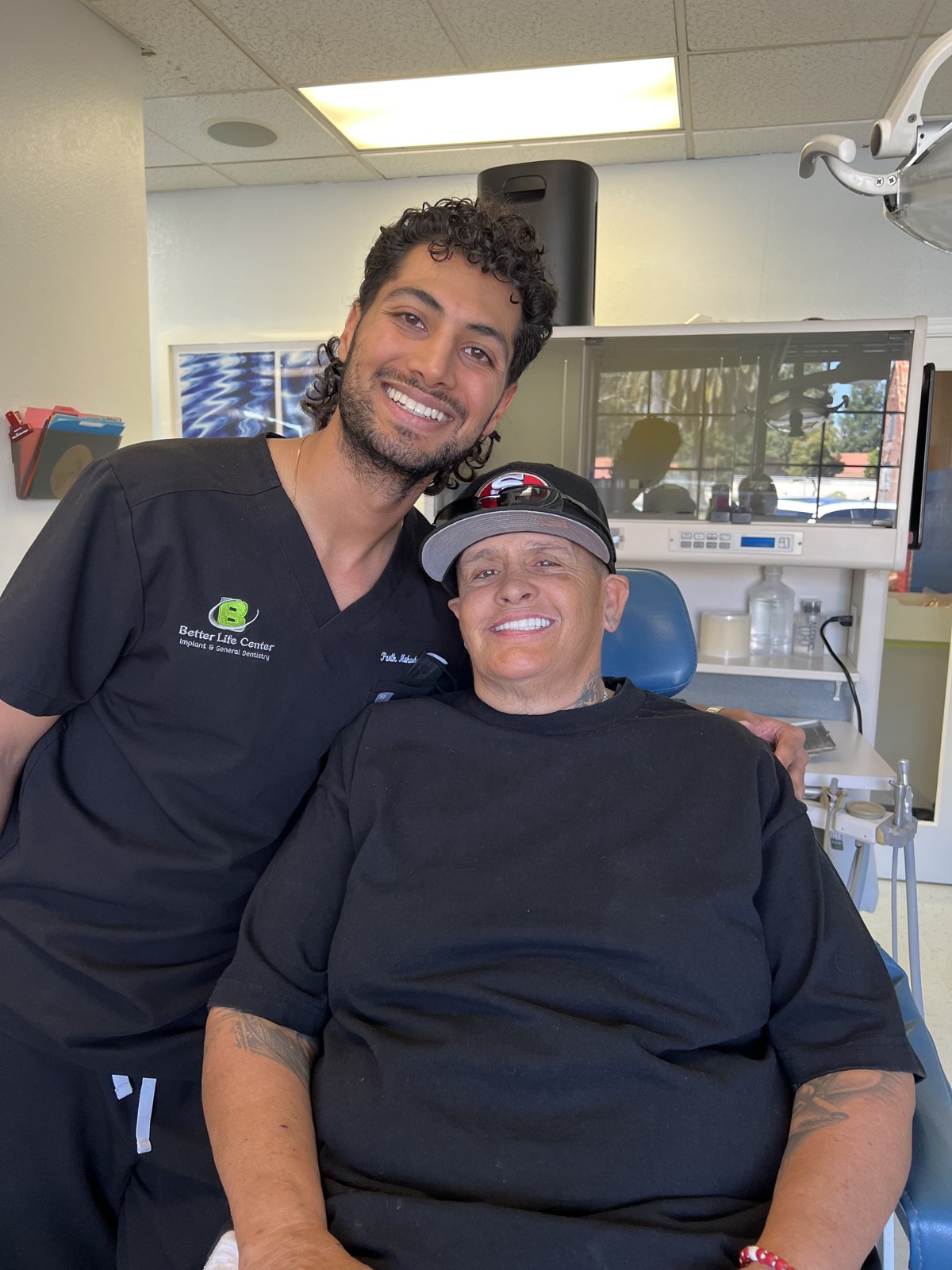
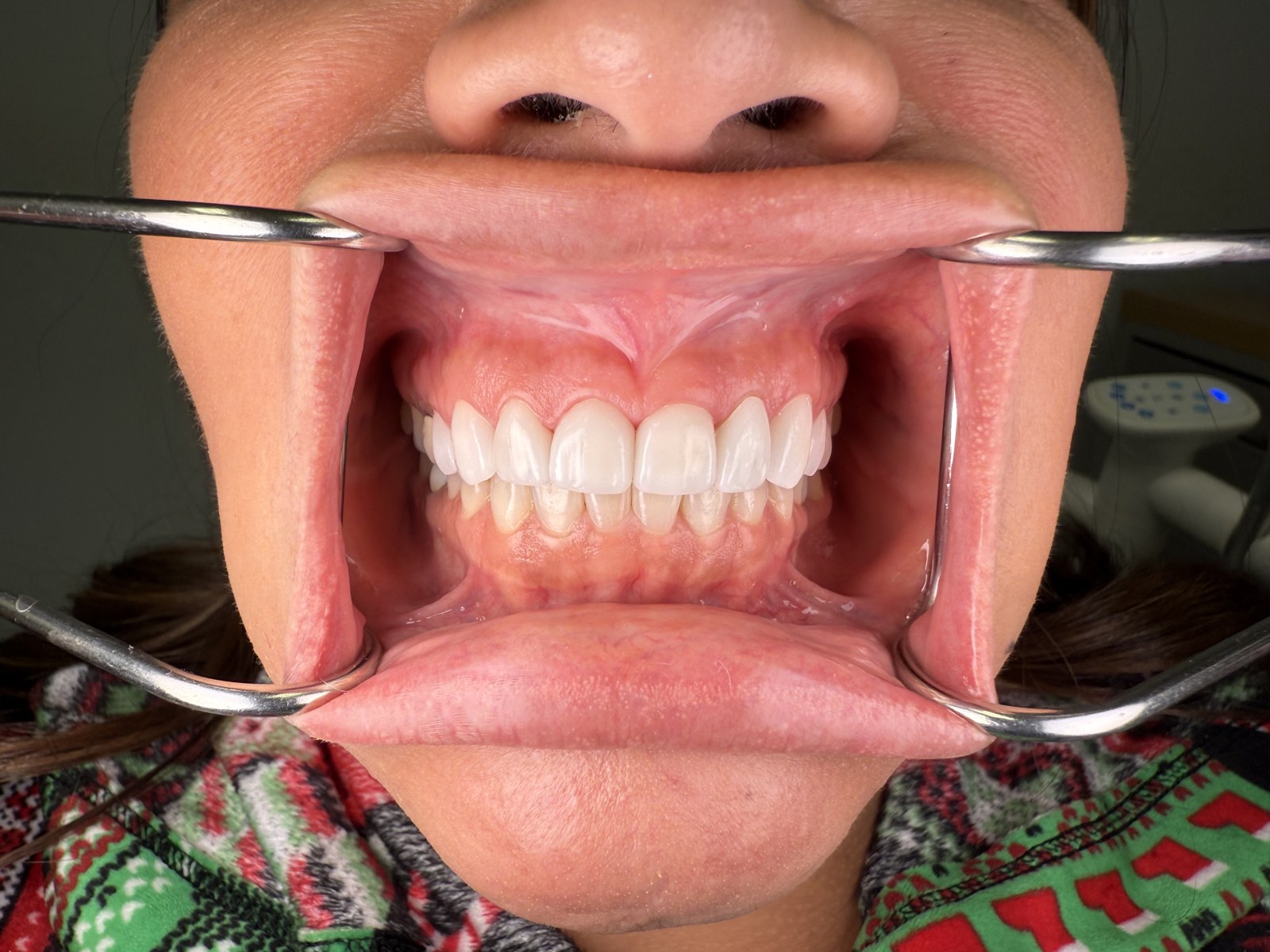
Patient photographs and case story shared with permission. This is one patient’s experience; individual results vary.
Previewing your smile with 3D printing
One of the hardest parts of deciding on cosmetic dentistry is imagining how the proposed changes might look.
Dr. Parth has recently purchased a 3D printer for Seven Hills General Dentistry, with the aim of using 3D-printed smile mock-ups to support cosmetic treatment planning. Ask at your consultation about current availability and whether this approach would be appropriate for your teeth.
A smile mock-up is a preview of a proposed design. When planning veneers, it can help you discuss changes to tooth length, shape, and proportion before finalizing the treatment plan. Maybe you want your front teeth slightly longer, or want to close a gap while keeping the proportions natural. A mock-up gives you and your dentist something specific to review and refine.
The preview method depends on your teeth and the treatment being considered. Dr. Parth can explain the process suitable for your case before you decide how to proceed.
A mock-up is a planning tool, not the final veneers or a guarantee of the finished result. The final appearance depends on your teeth, the treatment, and the restorative materials.
What is permanent and what is not
This distinction matters more than almost anything else on this page, and it is the part patients are most often unclear about.
Whitening removes nothing. If you dislike the result, it fades. The cost is spent, but the tooth is unchanged.
Bonding removes little or nothing. Composite can usually be removed or replaced later, and most bonding is done with minimal preparation of the tooth.
Veneer and crown preparation is permanent. Enamel that is removed to seat a veneer or a crown does not grow back, and that tooth will need a restoration on it from then on. The restoration itself will eventually need replacing, which means the commitment is ongoing rather than one-time.
None of this argues against veneers for the patients who need them. It argues for understanding what you are agreeing to, and for asking whether something smaller would get you most of the way there.
Before you agree to a veneer or whitening plan, ask these
This list is worth running through at any office, including this one. Clear answers to all of it tell you more than a price does.
- How much of my tooth is being removed, and is that reversible? The answer should be specific to your teeth, not general.
- What would happen if I only treated the two teeth that bother me? A willingness to answer this honestly tells you a lot.
- Will I see the shape before it is made permanent? For anything beyond a single bonded chip, you should.
- Do I have restorations that whitening will not change? Existing crowns, veneers, bonding, and fillings all stay the shade they are.
- What happens when this needs replacing, and roughly when? Every restoration has a lifespan. The plan should account for it.
- Does my bite need addressing first? Grinding and clenching significantly raise the risk of chipping and premature wear, and they are better handled before new work than after.
- Who does the work, and does any of it leave the building? Ask which steps happen in the office and which involve an outside laboratory.
What is the difference between a general dentist and a cosmetic dentist
This is worth answering directly, because it is not what most people assume.
Cosmetic dentistry is not a recognized dental specialty. The title does not by itself identify a recognized specialty qualification. Any licensed general dentist may describe their practice as cosmetic, and many do.
The phrase by itself therefore tells you very little. What tells you something is how much of this work the dentist does and how often, whether they show you their own cases, whether they plan on photographs and digital scans, whether they will recommend something smaller than what you asked for, and whether the restorative work stays with them.
After dental school, Dr. Parth spent four years in California training under Dr. Ryan Dunlop, a nationally recognized leader in implant surgery and full-mouth reconstruction, in a high-volume surgical practice. He is a general dentist with advanced surgical training, not a specialist, and the distinction is worth being precise about.
Full-mouth reconstruction is the work where how teeth function and how they look stop being separate problems, and that is the background he brings to cosmetic cases. His full background covers the rest.
What happens at your consultation
You describe what bothers you. That is the starting point, and it is more useful than any exam finding, because it defines what the treatment is actually for.
Then an exam, photographs, and usually a digital scan. Dr. Parth checks the health side first, because that determines what is possible. You look at the photographs together on a screen, which for most people is the first time they have seen their own smile the way other people see it. If you are considering veneers or a larger smile change, this is also the time to ask about previewing the proposed design. Dr. Parth can explain whether a smile mock-up would be useful for your case and confirm the options and timing available as 3D printing is introduced into the planning process.
You leave with options, what each one involves, how long each takes, and a written breakdown of cost. You do not leave having committed to anything.
What treatment looks like, visit by visit
The shape is similar whether the plan is one tooth or a full case. The number of visits changes.
Planning. For anything beyond a single bonded chip, there is a step between deciding and doing. Shade is selected in natural light against your skin. Shape and length are designed to your face. For larger cases you may see a preview of the proposed shape first, so changes happen on a model rather than on your teeth. This is the visit to be particular.
Whitening. Either a tray fitting followed by a course of wear at home, or an in-office appointment, depending on what suits your teeth.
Bonding. Typically one visit, finished when you leave.
Veneers and crowns. Usually two visits: preparation with temporaries, then fitting and bonding the final restorations. You see the finals in your mouth before they are permanently bonded, and adjustments are made at that point.
Larger plans. Staged over months, with checkpoints along the way.
Afterward. Cosmetic work needs maintenance like anything else. Regular cleanings, and a night guard if you grind, because grinding and clenching significantly raise the risk of chipping, fracture, and premature wear.
If the grinding happens at night, Dr. Parth will ask about your sleep and breathing while working out why, since a night guard protects the teeth without explaining the cause. Whitening results need periodic touch-ups.
If it has been years since you saw a dentist
Some of the people reading this have not been in a dental office in five years, or ten, and the reason they are reading at night rather than calling is that they are bracing for a lecture.
There is no lecture. Nobody here comments on how long it has been or reacts to your X-rays.
The order in that situation is the same as it is for everyone: find out where things actually stand, get the health side stable, and then talk about how it looks. Patients mention this in their reviews without being asked, which is generally when you know it is true rather than a line on a website.
Cosmetic dentistry on the West Side of Cincinnati

The office is at 5680 Bridgetown Road, in Bridgetown, just inside the I-275 loop.
Patients come from Green Township, Cheviot, Westwood, Western Hills, Delhi Township, Covedale, Dent, Monfort Heights, and White Oak, and from Miami Township, Cleves, Harrison, and Colerain Township.
If you have been assuming this kind of work means a drive across town, it does not have to. This is a general dental office on the West Side that does it here, with appointments long enough to plan it properly.
Hours are Monday through Wednesday, 8:00 AM to 5:00 PM, and Thursday, 8:00 AM to 2:00 PM. The office is closed Friday through Sunday. If you work daytime hours, say so when you call and the front desk will work with it.
What it costs
Cost is the reason most people put this off, and vagueness about it is the reason they put it off longer.
A one-tooth bonding repair and an eight-tooth porcelain veneer case are fundamentally different treatments, so there is no meaningful single price for cosmetic dentistry. What there is, is a short list of variables:
- How many teeth are being treated
- Which procedure, since whitening, bonding, veneers, and crowns sit at very different levels of work
- Whether anything needs repairing underneath first, such as decay, a cracked tooth, or gum treatment
- Whether the plan is done at once or staged over months
- Which materials, most relevant for porcelain versus composite
The written breakdown you get at your consultation separates four things: treatment that is clinically recommended, treatment that is purely cosmetic and optional, what your insurance is estimated to cover, and what is left for you. You take it home. Nothing is decided in the chair.
On insurance: treatment done purely to change appearance is generally not covered by dental plans, and that is better to hear now than at checkout. Where a procedure also restores function, such as a crown on a cracked tooth, coverage often applies. Seven Hills General Dentistry accepts many plans, verifies your benefits before your appointment, and files claims on your behalf, so you can review your estimated out-of-pocket cost before treatment.
For patients without insurance there is an in-house wellness plan, and payment options are available for larger treatment plans.
What our patients say
Rated 5.0 on Google. Read more from our patients.
The theme patients raise most often is that Dr. Parth explains what he is doing and does not rush. For cosmetic work, where much of the result depends on how carefully someone looked at your face before choosing a shade, that turns out to matter more than the equipment does.
Frequently asked questions about cosmetic dentistry in Cincinnati
Will my teeth look fake?
They should not, and that is decided at the design stage rather than at the laboratory. Shade is chosen against your skin tone, length and shape are proportioned to your face, and small natural variation between teeth is built in deliberately. If this is your main worry, say so at the first visit, because it changes how the case is designed.
Can I preview what veneers might look like before treatment?
A smile mock-up can help you review proposed changes to tooth shape, length, and proportion before finalizing a veneer plan. Dr. Parth has recently purchased a 3D printer with the aim of adding 3D-printed smile mock-ups to cosmetic planning at Seven Hills General Dentistry. Ask about current availability, whether a mock-up is appropriate for your case, and what the preview would involve. A mock-up is a planning aid and does not guarantee the final result.
Are veneers permanent?
The preparation is permanent, the veneers are not. Most veneers require removing a layer of enamel, and enamel does not grow back, so that tooth will need a veneer or a crown on it from then on. The veneers themselves wear, chip, or need replacing over time, so they are better understood as long-term restorations than as a single purchase.
What happens to your teeth under veneers?
The tooth is still there, reduced by a thin layer on the front and sealed beneath the veneer. It can still decay at the margins, which is why brushing, flossing, and regular cleanings matter as much with veneers as without them. Where decay does start on a veneered tooth, it usually begins at the edge, which is what regular checks are looking for.
How long do veneers last?
Porcelain veneers commonly last many years with good care, and composite generally has a shorter lifespan before it needs refreshing. What matters most is whether you grind your teeth, whether you wear a night guard if you do, and how healthy the gums around them stay. Dr. Parth gives a realistic range for your case rather than a figure taken from a brochure.
Are veneers bad for your teeth?
The veneer itself is not. The enamel removal is the irreversible part, which is the tradeoff to weigh and the reason smaller options are considered first here. For someone who genuinely needs several front teeth changed in shape and color, veneers are often the appropriate treatment, and for a single chipped corner they are usually more than the situation requires.
What is the difference between bonding and veneers?
Bonding is composite shaped onto your tooth in one appointment, with little or no tooth removal. Veneers are shells covering the front of the tooth that usually require preparing the enamel first. Bonding is more conservative and easier to repair, while veneers hold color and polish longer and handle larger changes in shape. Which one fits depends on how much has to change.
How much does cosmetic dentistry cost in Cincinnati?
It depends on how many teeth are involved and which procedure, so a number quoted before an exam is a guess. What Seven Hills General Dentistry commits to is a complete written breakdown at your consultation, with nothing decided in the chair. Treatment can also be staged over time rather than done all at once.
Does dental insurance cover cosmetic dentistry?
Generally it does not. Treatment done purely to change appearance usually falls outside dental coverage. Procedures that also restore function, such as a crown on a cracked tooth, often have some coverage, and the front desk verifies your specific benefits before you commit to anything.
How long does professional teeth whitening last?
It varies with diet and habits, and it is not permanent for anyone. Most patients maintain the result with periodic touch-ups rather than repeating the full course. Coffee, tea, red wine, and tobacco are the usual reasons a result fades sooner.
Is teeth whitening safe?
Professional whitening supervised by a dentist has a long record of use. The common side effect is temporary tooth sensitivity, which typically settles after treatment, and a properly fitted tray keeps the gel off the gums. Dr. Parth checks for decay and exposed roots first, because whitening over either of those is where problems tend to come from.
Will whitening work on my crowns and fillings?
No. Whitening changes natural tooth structure only, so crowns, veneers, bonding, and fillings stay the shade they are. If you have restorations in your smile line and you whiten, they may need replacing afterward to match, which is worth planning for before you start rather than after.
Can I fix just one tooth?
Often, yes. A single chipped or discolored front tooth can frequently be handled on its own with bonding, or with one veneer or crown matched to the teeth beside it. Matching a single restoration to its neighbors is technically demanding, but it is usually preferable to treating teeth that needed nothing.
My front tooth turned gray after a root canal. Can that be fixed?
Usually, though not with standard whitening, because the discoloration comes from inside the tooth rather than from surface staining. Depending on the tooth, the options generally involve whitening the tooth from the inside, or covering it with a veneer or crown. Which applies depends on how much sound tooth structure remains, which the exam and an X-ray show.
Who is the best cosmetic dentist in Cincinnati?
No one can answer that honestly, because there is no board that ranks it and cosmetic dentistry is not a recognized specialty. What you can do is ask any dentist you are considering how often they perform the specific procedure, ask to see their own cases, and notice whether they are willing to recommend something smaller than what you came in asking for.
What if I have not been to a dentist in years and feel embarrassed?
That describes a large share of the people who walk through this door, and nobody here comments on it. Treatment starts with where things stand now, moves to getting the health side stable, and then addresses how it looks. There is no lecture attached.
About the dentist who reviewed this page
Dr. Parth Maheshwari, General Dentist
Dr. Parth completed his dental degree at the Southern Illinois University School of Dental Medicine, where he was the youngest member of his class, and went on to four years of surgical training in California covering implant placement, bone grafting, and full-mouth reconstruction.
He was born in India, lived in Kenya and Canada, and grew up in Effingham, Illinois. He now provides general, restorative, cosmetic, and implant dentistry in Bridgetown.
Read Dr. Parth's full background
Find out what your options actually are
You do not need to arrive knowing which treatment you want. Start with the thing that bothers you, and compare the options with Dr. Parth.